
A fictional, but not impossible, story based on a future that could be if current science and research-backed solutions to climate change were implemented by those in power.
August 2030. The looming threat of a 26 billion euro fine snapped the Irish Government into action, on top of the immense scale of public outcry after eight catastrophic winter storms in five years. The Just Green Transition started in mid-2025, prioritising wellbeing, environment and health, above any other consideration. A second instalment of What If They Fixed It? Part 1 published on Medium with Irish Doctors for the Environment.
The air was still as the park began to bustle with Saturday morning life. Joggers, parents with children, the hubbub and laughter gently roused me from my mid-morning doze. I had drifted off during savasana in my yoga session, the dappled light through the trees caressing my forehead as I came to and opened my eyes.
The late summer heat was already stifling before midday. This was the new norm, and while the lush greenery on the street that Dublin had invested in provided merciful shade and cooling, I frowned in concern as I thought of my dear friends in Spain, feeling guilty as though I had left them behind to suffer in the intense heatwave gripping the south of Spain. Málaga too had tried to mitigate its urban heat island through greenifying and clever urban planning to create ventilation, but the memory of my heart pounding, headaches, rapid breathing and sluggish movements throughout prior heatwaves was still fresh in my head from last year. And that was my experience, as a young, fit and healthy person – my poor elderly neighbour María José had been hospitalised with her heart problems and had needed extra help at home before I moved back to Ireland. I would check in with them all later.
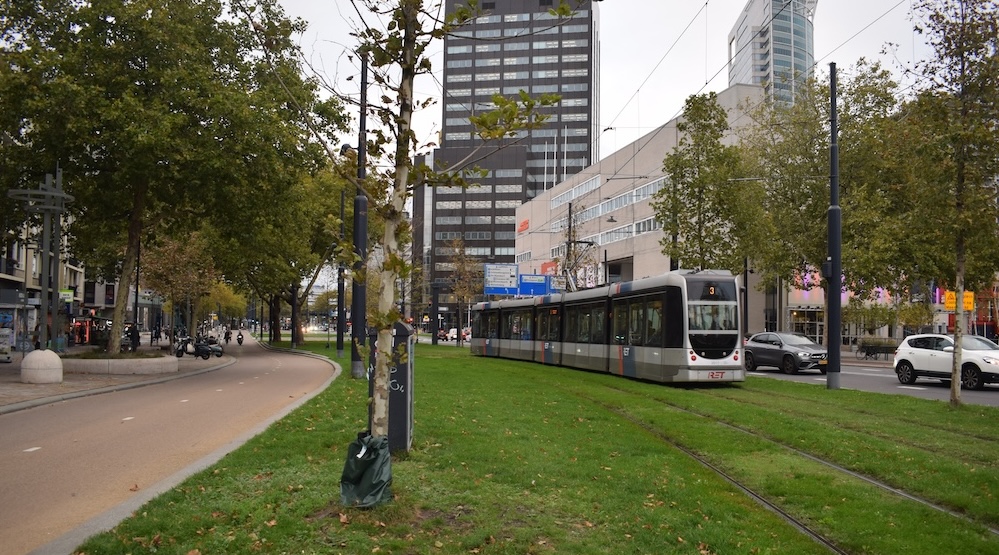
I pushed off on my bike out of the park, the soft rush of air cooling my forehead. The stillness of the morning carried only children’s laughter and birdsong in the trees overhead – there was no traffic on this street to drown it out. I breathed deeply and sighed – despite the worry of my friends in Spain, today would be a good day. That was something I still didn’t take for granted, breathing in the city air and not being immediately nauseated by noxious exhaust fumes. The air was clean, fresh, and I had the blessed luxury of not a single obligation today.

Orlagh Gaynor (PT)
Operations Officer with Irish Doctors for the Environment
Orlagh Gaynor is a physiotherapist from Ireland and Operations Officer with Irish Doctors for the Environment. She is studying a Master’s in Planetary Health and uses creative writing to offer hope and a vision of a future to fight for.
I decided to head to the community garden I was a member of. They had cropped up all over Dublin these last few years since the Just Green Transition, and each had different economic models and funding sources. Rathmines Community Garden operated on a work-share and needs-based model – volunteers like myself tended the gardens under supervision of council-employed horticulturists, and our share of the yield was based on the hours we had put in. We then donated a percentage of our share to the nearby hospital, where our organic fruits and vegetables nourished patients back to health.
Ireland had been heavily reliant on imports of fresh produce from climate-vulnerable hot countries, with only sixty field vegetable growers in the country immediately prior to the Just Green Transition. Our food security was at risk, and thus an overhaul of our farming supports for produce growers, in addition to community garden supports, was born of this necessity. We learned to eat in harmony with the seasons, themselves changed by the damage inflicted on our earth systems. The contents of our plates changed to include more plants, as they were cheaper, plentiful and healthier.
Elias, the garden supervisor, approached me as I locked my bike.

“You’re working today in this heat?” he grinned.
“I knew you’d have the sprinklers on!” I replied teasingly. “And you still owe me your mother’s vegetable tagine recipe! Did you enjoy the gazpacho I made you?”
“You didn’t hold back on the garlic, but it was very refreshing yesterday in the sun with some ice, Alhamdulill’ah!”
I laughed. It was true, I always added an extra clove, as I had been taught to by María José. “Well, there’s another bottle for you if there are any ripe tomatoes!”
After cooling myself in the recycled-water sprinklers, I set to work beside Elias. His roughened hands moved deftly in the soil, fingers plucking nimbly at the sun-blushed peppers and tomatoes. He had worked on his father’s vegetable farm at home in Morocco, but each year had become more difficult for them as the Sahel region became an increasingly harsh environment to live in. Under the Climate Refugee programme, he’d moved over to Ireland just three years ago, and his English now wandered deliciously between his native Darija Arabic lilt to inner-city Dub.
Just under two hours passed, and we took stock of the fruits of our labour. Elias pressed my share of produce into my arms, bidding me farewell until my next shift during the week. I rode off, tomatoes bouncing in the basket of my bike, my mouth already watering at the thoughts of the sharp, tangy gazpacho I would make.
The wide cycle lanes made it easier for my bike to lumber side-to-side a little under the weight of my vegetable bags on my handlebars – I’d stupidly forgotten my panniers. Parking in the bike bunker, I caught sight of my neighbour who’d become my Irish María José, walking slowly, stooped over her walking frame.

“Mrs McCauley! You shouldn’t be out in this heat!” I admonished, concerned. She turned to face me and smiled.
“Oh…I’m too hot and too lonely cooped up in the house like a caged hen,” her voice croaky and feeble, puffed from the exertion in the heat. “The library has a storytelling thing on, I might see some people and I know it’ll be a bit cooler there.”
The library, as well as other public places, had started to run Cooling Centres in the last year or two, in order to protect the vulnerable from the worst effects of the heat. It was something I had only seen during my time in Spain, but was starting to be necessary here too.
“In that case, let me walk with you there, and make sure you get there alright”.
“All right, pet.”
We moved slowly, stopping every so often for a drink from my bottle, which I insisted she take.
“The summers were never like this,” she said. “It’s all wrong. The blackberries are too early. The leaves are turning already. I don’t know what it’s all coming to.”
She had grown up on a farm in rural Clare, knew nature’s calendar like her own children’s birthdays. Her grief hung in the air and met mine, mingling to form a cloud of despair.

“I know,” I replied darkly, quietly. “We’ve done what we can now, thankfully. I hope it’s enough to avoid the worst of what could have been.”
“It is great to see such wonderful changes in how we live,” she brightened. “I never thought I’d live to see anything like this – grass growing out of city buildings, would you be minding!”
Chuckling, I said goodbye at the library door, asking her to let me know if she wanted company on the way back.
A text pinged on my phone. My friend, Julie, wanting to go for a walk by the lake in about an hour. I sent an affirmative reply, and set off home for a late lunch.
Julie, at seven months along, was getting big, and didn’t mind in the slightest being told as such. She watched me enviously with a wry smile as I dismounted my bike with ease, her own condition making cycling difficult on her hips, in addition to the heat. She had been checked for pre-eclampsia only two weeks ago, and I worried about her out in the heat, but in the green shade from the trees and alongside the cool, blue, tranquil lake, she was glowing.
I hugged her, not having seen her for some weeks. She was my first friend to have a baby, and we chatted about her recent medical scare, both of us talking shop as we’d both worked as pelvic health physiotherapists. I glanced at her hands.
“Are you sure you’re alright?” I asked. “Those hands look a bit puffy.”

She admitted to struggling a little with carpal tunnel syndrome, but assured me she was taking her blood pressure every day. I made her sit down with me, as I worried about the effects of this heatwave on her, and on baby.
“I think we took photos here a few years ago,” she wondered aloud, and we both took out our phones and dug through our photo archives. Sure enough, she was right. There we both were, seven years younger, mucking around at that very spot in front of the lake.
“God, the lake is so much cleaner now. All that algae is gone, and there’s so many more animals and plants. It looks much better,” she marvelled.
“Will we recreate the photo?” I suggested, grinning. “Baby can see what sort of hijinks mammy got up to before they came along!”
“Go on, sure!” she laughed.
All of a sudden, we were twenty-three again as we posed for a photo. We both pointed at her tummy, then we hugged.
“Oh!” gasped Julie suddenly, smiling. “Feel this!”
She grabbed my hand and placed it on the side of her belly, just under her ribs. A quickening under my palm of what was unmistakeably a foot, kicking us as if to say Don’t forget me! I’m here too!
My eyes welled up with tears. My friend, about to embark on the next chapter of her life. And another little life, about to begin soon.
“Julie, that’s amazing,” I breathed, awestruck. Baby kicked again. The tear escaped and slid down my cheek. I wiped it away and turned to the lake, thinking of our old photo, the algae-filled lake devoid of life, now teeming and thriving.
“What kind of a world have we made for you, little one?” I asked. “I hope we’ve left it better than it was when we got here.”
Julie smiled. “What do we tell them, when they get here?”
I sniffed, not quite sure how to answer immediately. Decades of history ran through my head in rapid-fire succession – the greed, the plundering of the earth, the injustice, the destruction. So many lives lost. So much beauty and nature lost. And in true capitalist fashion, it took the threat of a massive financial hit to spark any action, rather than leading and acting with compassion for humanity, and for the Earth. The frustration of it all welled in me, as I thought of the thousands of scientists and activists before me who had begged world leaders for climate action, only for the message to fall on deaf ears. How they had betrayed generations past, and the unforgivable colonization and subjugation of their fellow man. I thought of Elias and his family, their farming livelihoods robbed from them by richer men in countries they would never set foot in. María José, who would not live to see another Christmas after her latest heart episode. The millions of men, women, children, husbands, sisters, families, who had suffered needlessly, whose stories were told merely through datasets and academic papers. They remained faceless, yet haunted me so at the periphery of my waking hours. How could we explain this to the children yet to come?
“Tell them we’re sorry,” I began slowly, my voice catching a little. “They will look at our past and ask us why didn’t you do anything sooner? How could you let this happen? And we can only beg their forgiveness, Julie. We had failed, or rather, our leaders, those elected to protect us, failed us, and we failed to speak up. It was only by taking action, by taking such a leap, did we learn how to live better. Live in close connection to nature, and love it deeply – love each other more deeply,” I continued, feeling stronger now.
Julie looked at me intently, her expression a sad smile in recognition of how bittersweet this new, green, sustainable way of living was, and of the human cost that preceded it.
“This little one will know more compassion and empathy than any one of us. We have to make sure of that. After all that has happened, this is how humanity and nature heal together – through actions rooted in love,” I finished simply.
Julie hugged me closely, and the baby kicked us both again.
