
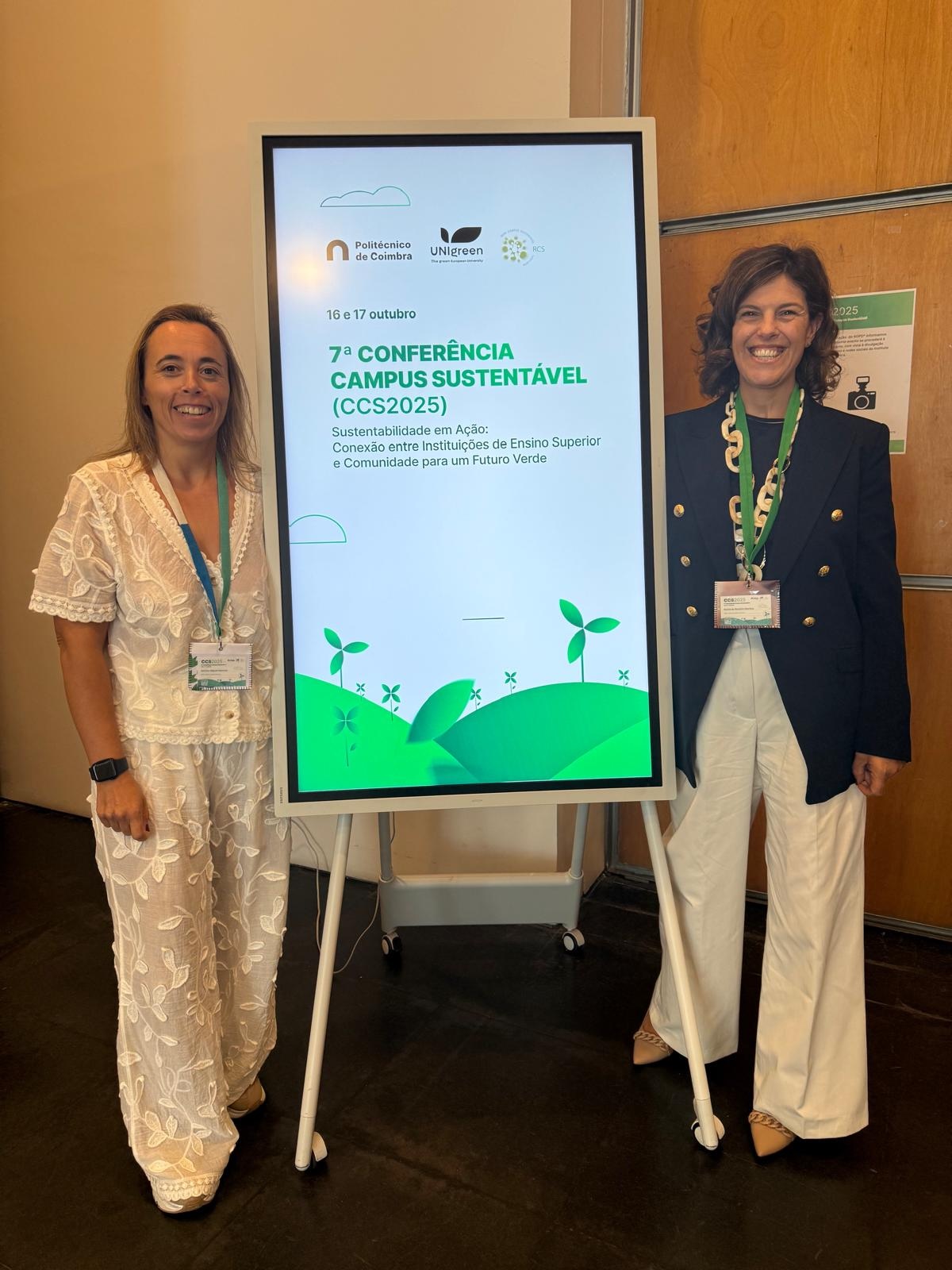
At the recent 7ª Conferência Campus Sustentável (CCS2025), a Sustainability Congress held in Coimbra, Portugal, I was pleased to share two initiatives reflecting EPA’s mission: integrating environmental and planetary health across physiotherapy education and practice. The vibrant discussions with educators, clinicians, and students confirmed our mutual dedication to climate-ready, sustainability-literate physiotherapy.
The brief case: Physiotherapists are increasingly called to address environmental determinants of health. Building capacity across training, clinical care, and policy is no longer optional—it’s necessary to protect patients, communities, and the sustainability of health systems.
In the first presentation on sustainability in physiotherapy education, we presented a recent study of 113 undergraduate physiotherapy students in Portugal. The study found strong recognition of the environment-health link and support for curriculum integration, but identified significant training gaps and limited institutional backing. While sustainable behaviours, such as reducing single-use items, are emerging, they remain unsystematic and poorly supported by assessment and policy.
We therefore recommended embedding sustainability across all modules rather than as add-ons, offering faculty development with ready-to-use resources, and implementing authentic assessment methods such as case-based audits and green clinical routines. We also advocate for student leadership pathways, including green ambassadors and quality-improvement projects, to empower future physiotherapists as agents of change in promoting environmentally responsible health practices. Students are ready, and institutions must match their motivation with structure, resources, and assessment.
In the second presentation on climate change and physiotherapy practice in Lusophone contexts, we presented a cross-sectional study that examined 52 clinicians’ knowledge, attitudes, and routine practices in climate-sensitive care. While there is broad acknowledgement that climate change affects health, many clinicians report limited understanding of specific pathways, such as heat stress and air pollution, and remain uncertain about their relevance to current caseloads. Adaptation measures, including hydration protocols, heat-aware scheduling, indoor air-quality checks, and active-transport route planning, are inconsistently applied across services.
In the study, we therefore recommended prioritizing service-level protocols such as heatwave plans and air-quality action cards, integrating environmental risk screening into routine assessments covering heat exposure, housing conditions, and commute, and providing continuing education in climate-informed rehabilitation supported by case libraries and practical guides. The study concluded that while awareness is high, practice remains patchy, and clear protocols, routine screening, and targeted training are essential to close the implementation gap.

Andrea Ribeiro (PhD)
Coordinator professor, Director of the research Center, President of the International Institute of Physiotherapy
I am a physiotherapist since 1999, and a teacher and researcher since 2001 and I enjoy this a lot. My research fields are musculoskeletal, cardiorespiratory, and environmental physiotherapy. Since 2023, I havealso been secretary of ENPHE, the European Network of Physiotherapy in Higher Education, and am leading its environmental physiotherapy working group.