

Environmental physiotherapy was featured for the first time ever in a focussed symposium at the Philippine Physical Therapy Asssociation National Convention 2025. The session “Environmental Physiotherapy and Sustainability: Integrating Teaching, Research, and Community Practice” brought together physical therapy educators, researchers, clinicians, and students to explore the expanding role of physiotherapy in promoting planetary health. Grounded in a three-pillared sustainability framework—environmental, social, and economic—the session highlighted how physiotherapists can meaningfully contribute to sustainable healthcare systems.
The discussion emphasized the growing responsibility of health professionals to consider the ecological impact of practice, the importance of social equity in healthcare access, and the need to ensure economic viability while maintaining high-quality patient care. Participants engaged in reflective, interactive lectures, case applications, and collaborative dialogues designed to deepen understanding of environmental physiotherapy (EPT) and its practical implications.
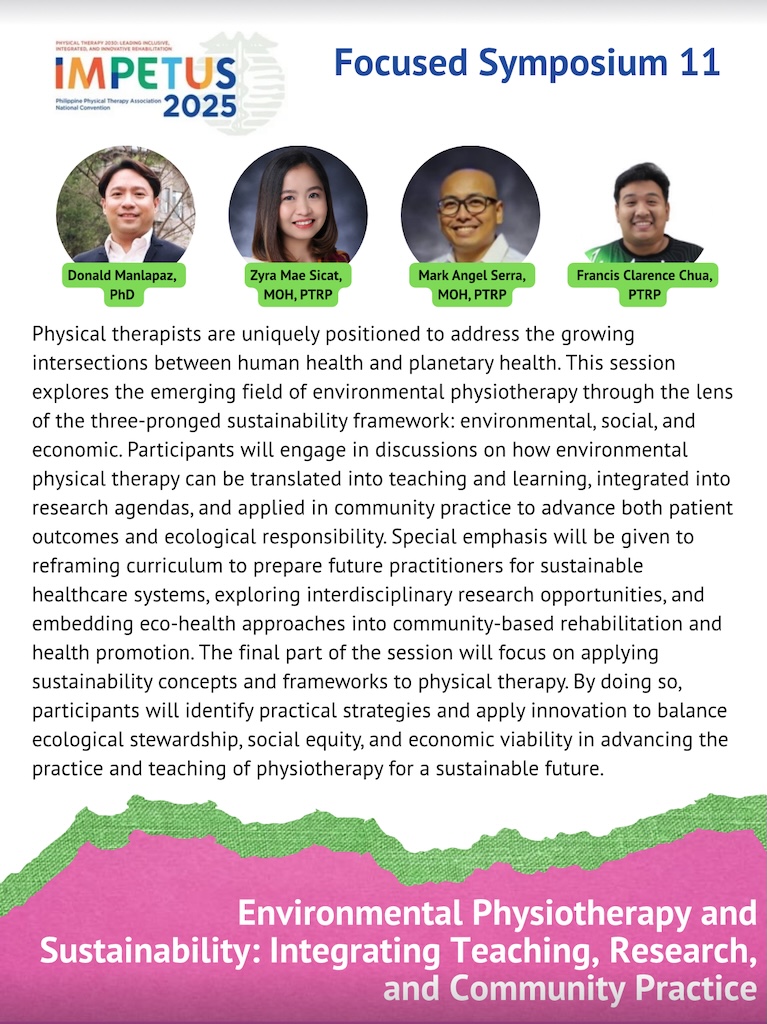

Donald Manlapaz (PT, PTRP, PhD)
Associate Professor, University of Santo Tomas, Philippines
Donald serves as the Chairman of the PT Department of the University of Santo Tomas – College of Rehabilitation Sciences. He completed his PhD in Physiotherapy at the University of Otago where he focused on osteoarthritis and exergaming. He is also interested in the field of technology and EPT.
The individual presentations
EPT & Sustainability: Integrating Teaching Practice, Speaker: Zyra Mae Sicat
This presentation examined how environmental physiotherapy concepts can be embedded within PT curricula. Ms. Sicat discussed avenues for integrating health principles into existing courses, designing experiential learning activities, and reframing competencies to prepare future practitioners for sustainable care delivery. Examples included low-waste clinical engagement, community mobility initiatives, and curriculum mapping aligned with the UN Sustainable Development Goals.
EPT & Sustainability: Integrating Research Practice, Speaker: Donald Manlapaz
Dr Manlapaz emphasised the need for physiotherapy research to include ecological and sustainability dimensions. He highlighted opportunities for interdisciplinary collaboration, methodological considerations in low-carbon research design, and thematic areas such as climate-linked disease burdens, access to rehabilitation during environmental disruptions, and sustainable innovations in PT technologies. He encouraged participants to rethink research questions through environmental, social, and economic lenses.
EPT & Sustainability: Integrating Community Practice, Speaker: Francis Clarence Chua
Prof. Chua presented community-based applications of environmental physiotherapy, focusing on inclusive, equitable, and ecologically sound rehabilitation approaches. Using case examples, he illustrated how community health programs can integrate active transport advocacy, nature-based rehabilitation, climate-resilient services, and participatory engagement with vulnerable populations. He stressed the role of PTs in supporting climate adaptation and community resilience.
EPT & Sustainability: Looking Forward, Speaker: Mark Angel Serra
Mr. Serra concluded the session by synthesizing key messages and outlining future directions for environmental physiotherapy in the Philippines. He encouraged participants to adopt sustainability frameworks such as the Triple Bottom Line, Planetary Health, and One Health in clinical decision-making and institutional planning. His talk highlighted innovation opportunities and strategic collaborations necessary to advance sustainable physiotherapy practice nationwide.
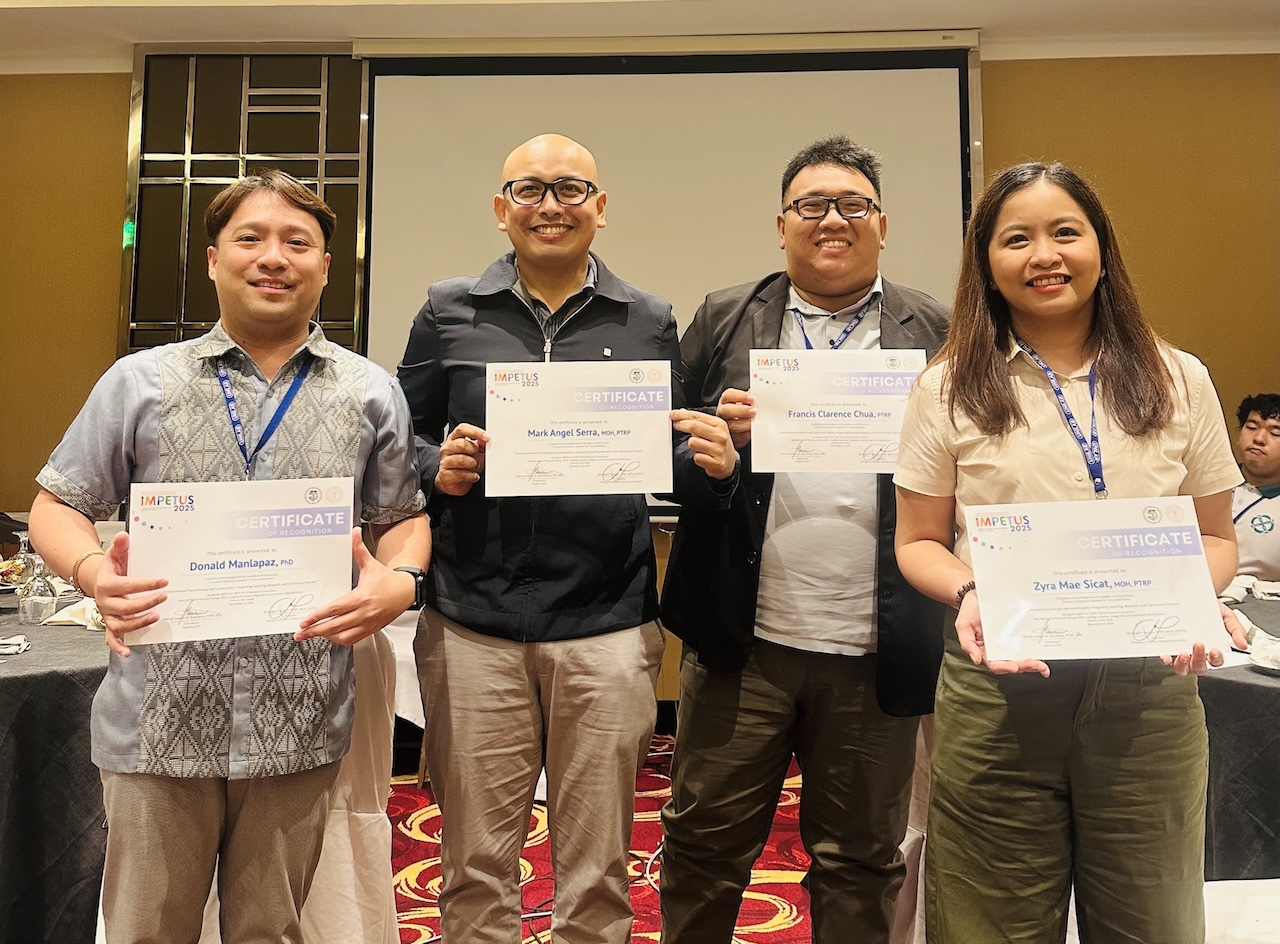
Key insights and outcomes from the Focussed Symposium
Participants reported the following major learnings based on their immediate comments:
Environmental physiotherapy is an emerging but essential field, strongly aligned with global health agendas. We need more COLLABORATION locally.
PT programs can progressively integrate sustainability by modifying curricula, embedding eco-health competencies, and encouraging green innovations in clinical education.
Research opportunities are expanding, especially regarding climate impacts on health and system resilience.
Community-based rehabilitation offers powerful avenues to promote environmental stewardship while enhancing social equity.
A sustainable physiotherapy profession requires balancing ecological responsibility with patient-centred care and economic feasibility.