
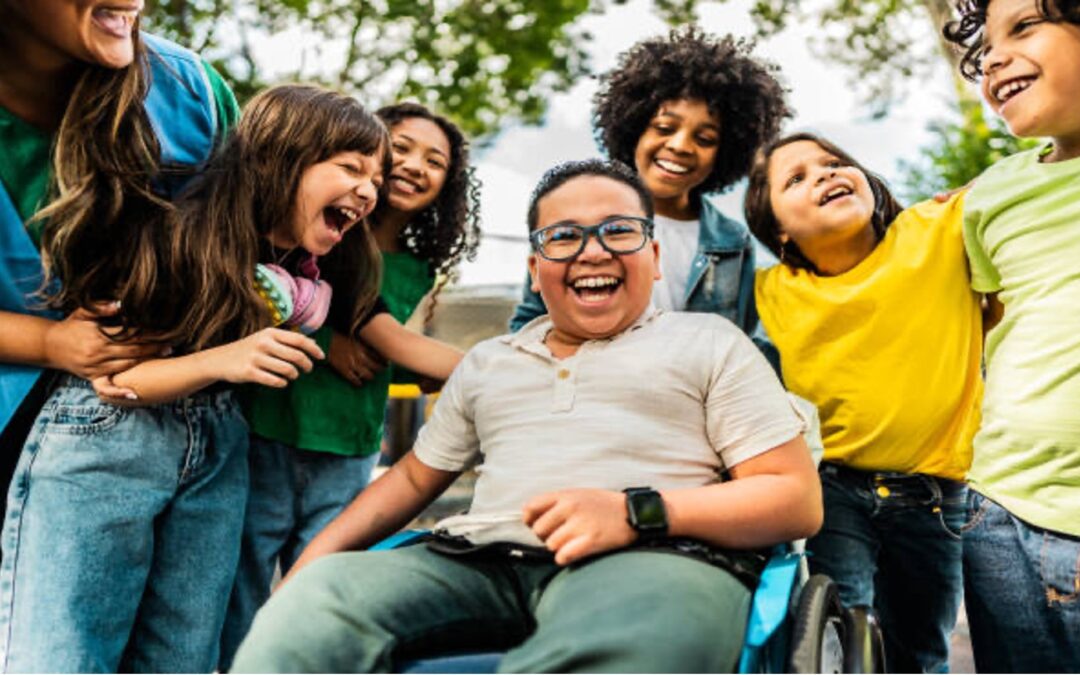
Playing in and gaining exposure to nature improves child health and well-being, healthy child development, and academic performance, and encourages children to be stewards of the environment. Children with disabilities often have difficulty accessing nature for a variety of reasons, and physiotherapists have a critical role in identifying ways that disabled and non-disabled children and their families can safely access the outdoors.
Globally, approximately 10% of children have disabilities (Olusanya, 2022; UNICEF, 2023), however these statistics may underrepresent the number of children with disabilities based on numerous factors, such as how the disability is defined. Some examples of disabilities that people may identify with include medical diagnoses (e.g. cerebral palsy), specific impairment (e.g. deaf, hard of hearing or blind), neurodiversity, invisible (e.g. cognitive or mental health), speech/language or communication impairment, or physical mobility (e.g. navigates the environment using a wheelchair, walker or other assistive device). In the United States, Black and multi-racial children have higher disability rates compared to Non-Hispanic White and Asian children (US Census 2019). When considering the social drivers of health and how that disproportionately affects a child’s ability to access nature, it’s important to consider the intersection between disability and race.
Children with disabilities especially benefit from being outdoors. The benefits of nature begin in-utero when the birth parent is exposed to the outdoors, which positively influences fetal development and growth, birth weight, and parental mental health (Fyfe-Johnson 2021; Tandon, 2024). Nature contact and exposure to vitamin D, starting as babies, improves physical activity, reduces nearsightedness, lowers the risk for obesity and associated health conditions, improves children’s stress and coping responses, facilitates the development of sensory systems, and leads to improved social relationships (Children & Nature Network, 2021; Fleury, 2025, Fyfe-Johnson 2021; Louv, 2008; Tandon, 2024). These positive outcomes extend throughout a child’s life, and evidence supports the positive impacts of nature on the well-being of adults. The benefits of nature and play are especially important for children with disabilities and their families (who may or may not identify as disabled), who are at increased risk for co-occurring chronic health conditions, larger body sizes, lack of physical activity, and reduced social interactions (CDC, 2024).
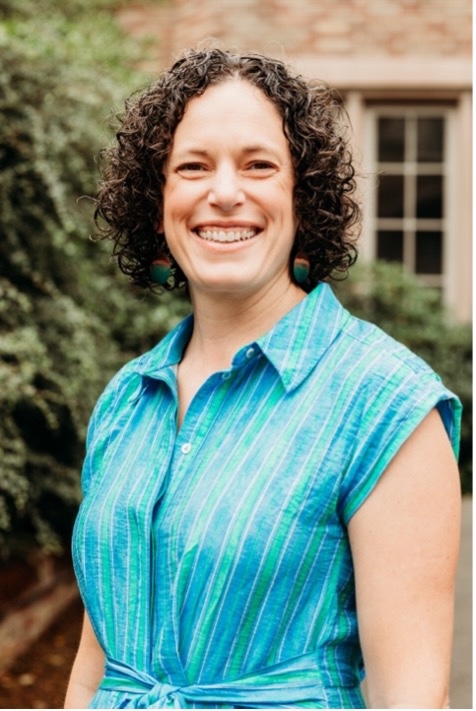
Shawn Rundell (she/her), PT, DPT, Board-Certified Clinical Specialist in Pediatric Physical Therapy
Pediatric Physical Therapist, Educator, and Consultant; Founder, Together in Nature Consulting, PLLC
Shawn is a pediatric physical therapist, educator, and consultant who strives to ensure people of all ages, abilities and identities can access nature. She has experience working with disabled children and their families, collaborating with community members to design accessible outdoor spaces, and educating others on disability and nature.
Models of disability influence how we view disabled individuals. Many healthcare providers and educators have been trained using the medical model of disability, where we are taught to fix or change the person with the disability. However, the human rights and social models of disability are much more inclusive and value the contributions of disabled individuals. They state that disabled individuals have the same rights as everyone else in society and that people are ‘disabled” by the barriers operating in society that exclude and discriminate against them (DARU, 2019; Inclusion London). From these models, the disability community, and my perspective, to address the challenges faced by children with disabilities in accessing nature, the way to address disability is to change the environment and society, rather than the children with disabilities.
There are country-specific policies and laws, such as the Americans with Disabilities Act (ADA), that provide protection and assurance that spaces are accessible; however, these are often just a starting point, and environments are often still not considered accessible to the disability community by following the guidelines. For example, a playground is not accessible to a wheelchair user if there is a ramp into a woodchipped area with play equipment even though that meets ADA guidelines.
The socioecological model (UNICEF) is a comprehensive framework to provide physiotherapists with tools and strategies to encourage accessible outdoor play for children and their families with disabilities.

The socioecological model (UNICEF) is a comprehensive framework to provide physiotherapists with tools and strategies to encourage accessible outdoor play for children and their families with disabilities.
Client Level (Parent/Caregiver/Child) Strategies
Ask how much time children and families spend in nature each week and the facilitators and barriers to accessing the outdoors.
Discuss outdoor adaptive recreation and equipment with families (or modify existing equipment to ensure it works outdoors).
Recommend accessible outdoor spaces for the child and their family to visit (e.g. local parks & playgrounds, hiking trails, places with beach wheelchairs, sensory-friendly gardens, etc.).
Communicate with the child’s daycare providers and school educators to discuss the availability and accessibility of their programs, indoor and outdoor spaces, and disaster evacuation plans in case of emergency.
Clinic and Community Level Strategies
Create. Design outdoor physical activity “camps” for children with and without disabilities.
Partnerships with existing programs. Partner with existing outdoor programs, camps, and organizations and their staff to brainstorm strategies and educate them how to include children with disabilities and neurodiversity.
Nature-Based Education collaboration. Collaborate with nature-based educators to ensure their programs (e.g. nature-based preschools) are accessible to children with disabilities and their families. Consider cost, transportation, physical and bathroom accessibility, curriculum, and knowledge of educators.
Society Level Strategies
Disability Laws and Policies. Consider how disability laws and policies, like the ADA, are starting points and advocate for building and outdoor design that extends beyond these guidelines.
Collaboration. Collaborate with landscape architects, urban planners, and disability communities to design truly inclusive outdoor spaces (e.g. not just adding accessible swings or equipment, but designing a space that fosters social connection and communication between children)
Accessible bathrooms. Work with Occupational Therapists and urban planners to design accessible bathrooms which include adult-sized changing tables in every park and outdoor space.
Funding. Advocate for insurance coverage and other financial supports of adaptive recreation equipment, durable medical equipment, and assistive technology that allows children with mobility difficulties to access the outdoors.
Access to nature is a human right for all individuals regardless of age, ability, or identity. Physiotherapists have a role in connecting with, promoting, creating, and advocating for outdoor spaces and programs to be inclusive of children with disabilities and their families at all levels of the socioecological model. By making the outdoors inclusive of all children, this strengthens the biodiversity of our communities and allows everyone to thrive together.
AI Statement
AI was not used for any portion of this blogpost or images.
References
Center for Disease Control. Disability and Health Related Conditions. Last updated December 2024. Accessed April 2025.
Children and Nature Network (CNN). Nature’s benefits for children with special needs. Research Digest September 2021.
Disability Advocacy Resource Unit. The human rights model of disability. Jan 2019. Accessed March 2025.
Fleury L, Charles C. Guidance on Nature’s Benefits in the Development of Children and Adolescents. Alana Foundation. Accessed April 2025.
Fyfe-Johnson AL, Hazlehurst MF, Perrins SP, et al. Nature and Children’s Health: A Systematic Review. Pediatrics. 2021;148(4):e2020049155.
Inclusion London. The Social model of disability. Accessed April 22, 2025.
Louv, R. (2008). Last child in the woods: Saving our children from nature-deficit disorder (Updated and expanded edition). Chapel Hill, NC: Algonquin Books.
Olusanya BO, Kancherla V, Shaheen A, Ogbo FA, Davis AC. Global and regional prevalence of disabilities among children and adolescents: Analysis of findings from global health databases. Front Public Health. 2022 Sep 23;10:977453. doi: 10.3389/fpubh.2022.977453. PMID: 36249226; PMCID: PMC9554924.
Tandon PS & Glassy DS. Digging into Nature: Outdoor adventures for happier and healthier kids. American Academy of Pediatrics: 2024.
UNICEF. Data for children with disabilities. Last updated June 2023. Accessed April 25, 2025.
UNICEF. Brief on the Socioecological Model. Accessed December 15, 2025.