
Environmental physiotherapy in Austria clinics
Written by Selina Hartmann, Alexander Frank, Emma Feichtinger, Robin Gruber, Christopher Holzmair
Introduction
In an era of escalating climate change and environmental degradation, healthcare professions are increasingly called upon to contribute to a more sustainable future. Environmental physiotherapy addresses this challenge by integrating ecological responsibility into the core of physiotherapy practice — from building and equipping clinics to daily operations.
Physiotherapy practices have a tangible ecological footprint, through energy use, material waste, and patient and staff transportation. As global warming progresses — with predictions of up to 3.9°C of warming by 2035 — the healthcare sector must also adapt to emerging health risks, including heat-related illnesses, increased allergies, respiratory problems, and climate migration. Vulnerable populations such as the elderly, children, and those with chronic illnesses are especially affected.
Embedding sustainability into physiotherapy is not just an ethical imperative; it brings multiple practical advantages. Sustainable practices reduce operating costs, improve air quality, create calming environments for patients and therapists, and enhance the overall value and resilience of clinics. Whether retrofitting existing practices with eco-friendly measures or constructing new ones using renewable energy and natural materials, physiotherapists can make a significant contribution to both public health and planetary health.
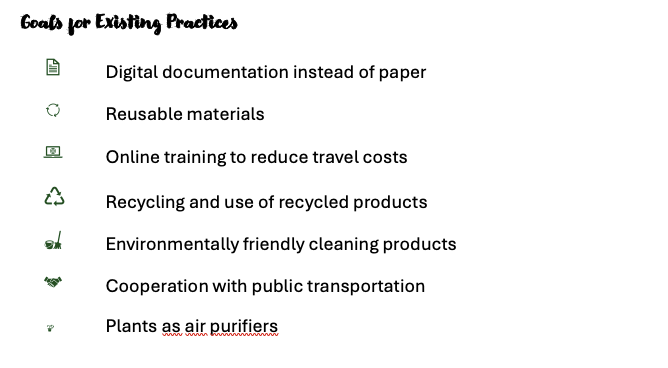
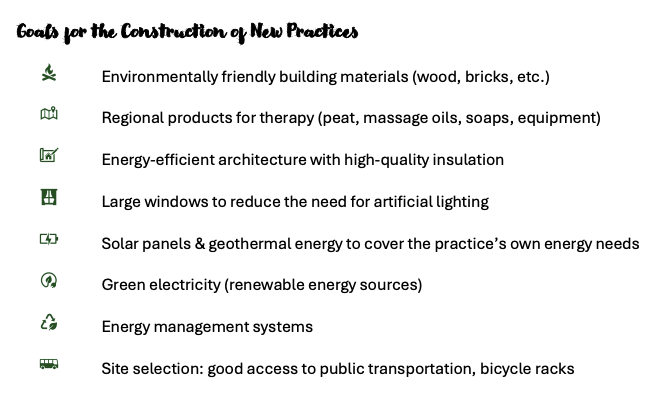
This handout outlines strategies for improving the ecological footprint of existing practices and key considerations for sustainable new practice construction. It also highlights two Austrian exemplary practices that can and should inspire future projects.
Welcome to the Therapy Center Purgstall
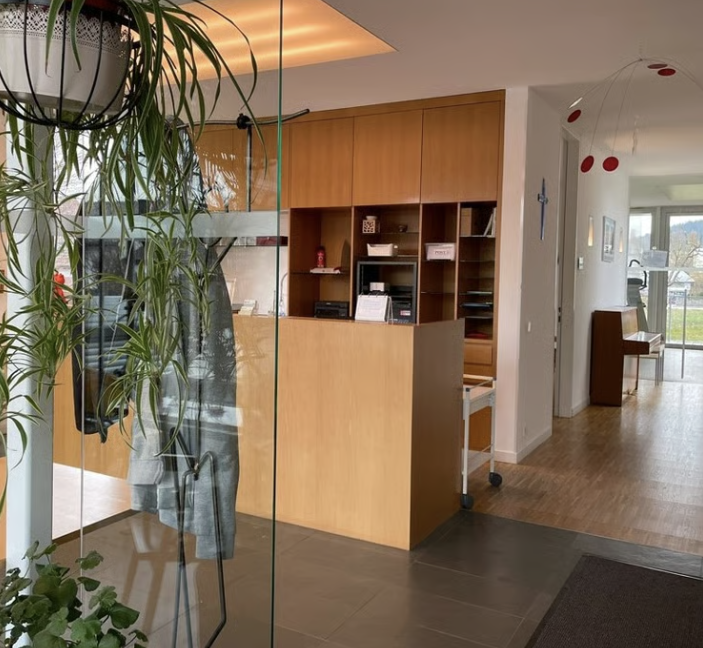
The Therapy Center Purgstall was founded in 2017 by Bernhard Spieslehner and is located in Purgstall an der Erlauf, Lower Austria. The practice covers an area of approximately 240 m², spread over two floors, and offers barrier-free access via a ramp. The therapeutic services are provided by an interdisciplinary team of independent physiotherapists, occupational therapists, osteopaths, and other specialists. The focus is on the treatment of orthopedic, surgical, trauma-related, and neurological conditions — both before and after surgical procedures or injuries. The range of services is complemented by sports physiotherapy, therapeutic massage, yoga, childbirth preparation, and seminars on mental health.
Sustainable Timber Construction
The Therapy Center Purgstall was built by Holzbau Strigl GmbH using timber frame construction, a building method that prioritizes sustainability and environmental friendliness. The building meets passive house standards, characterized by minimal energy loss and extremely low energy consumption. The key features of the construction method are:
Timber Frame Construction Using wood as the primary building material significantly reduces the carbon footprint, as wood is a renewable resource that stores carbon. The structure consists of prefabricated wooden frames filled with ecological insulation materials such as cellulose or wood fiber panels to ensure optimal thermal insulation.
Climate-Friendly Materials Only natural and low-emission building materials were used, free of harmful substances such as formaldehyde or other chemicals. This creates a healthy indoor climate for patients and staff.
Energy Efficiency The building is equipped with state-of-the-art thermal insulation to minimize heat loss. A heat pump provides CO2-neutral heating by utilizing ambient heat without relying on fossil fuels. This is supplemented by a photovoltaic system with battery storage, which covers the center’s own electricity needs and stores surplus energy.
Natural Integration The architecture of the building blends harmoniously with the surrounding nature through the use of wood and a light-filled glass facade. The glass facade features a special coating that protects against weather influences while optimizing the use of natural daylight.
No Basement, Strip Foundation To further reduce the ecological footprint, no basement was constructed. Instead, a strip foundation was used, requiring less concrete and thus fewer resources.
Zero Emissions and Noise Protection The operation of the therapy center produces no CO2 emissions and is almost noise-free, benefiting both the environment and the patients.
The combination of these measures helped the Therapy Center achieve 751 out of a possible 1000 klimaaktiv points. As a result, the center received official recognition with the klimaaktiv silver award.
Welcome to the Therapy Center PUR
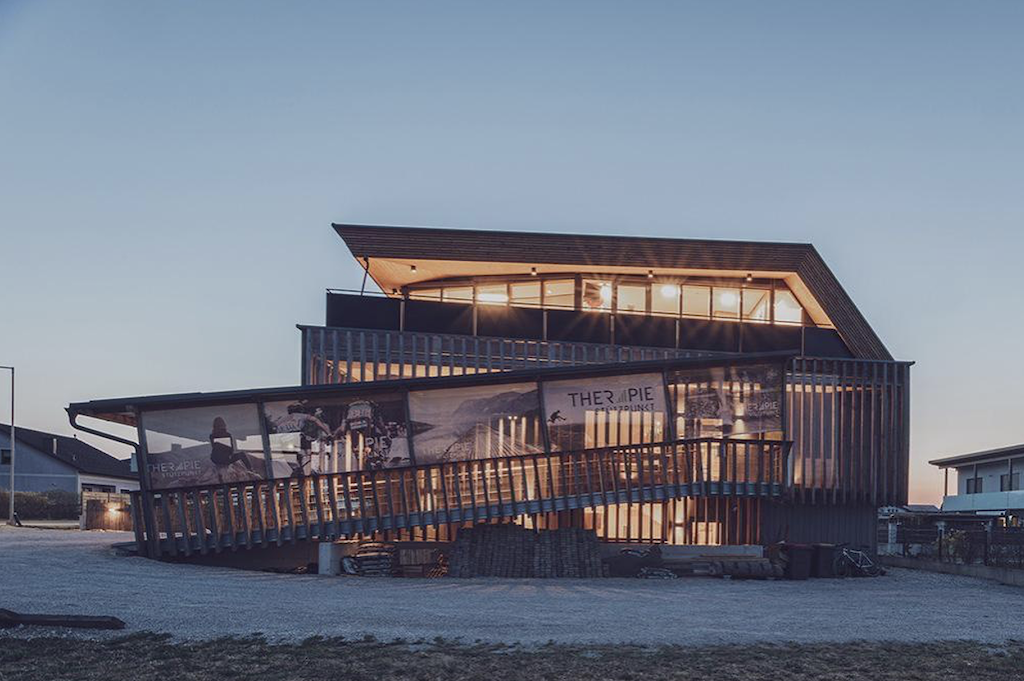
The Therapy Center Pur was founded by the qualified physiotherapist Thomas Plöckinger-Schatzl and is located in the lower Mühlviertel – in Freistadt. The practice covers an area of 300 m2 and is divided into two functional areas: a therapy room and a training area. The therapeutic services are provided by an interdisciplinary team of independent physiotherapists and masseurs. The focus is on the treatment of orthopaedic, surgical, traumatological and neurological complaints – both before and after surgical procedures or injuries. The range of services is complemented by sports therapy.
This therapy center is an institution committed to environmental responsibility and sustainability. Its fundamental concept is guided by the functional needs of the patients while ensuring harmonious integration into the surrounding natural landscape. The building is constructed using sustainable timber frame methods. Its exterior is clad with Agepan panels and protected from the weather by a glass facade. Patient access is ensured via a direct car approach and a fully barrier-free ramp, providing safe and convenient entry for all users.
Sustainable timber construction offers a significantly lower environmental impact than traditional building materials like concrete and steel. It reduces environmental impact and greenhouse gas emissions. Timber is renewable, stores carbon, and requires less energy to produce. It also offers good insulation and energy efficiency. Engineered wood adds strength and versatility.
Photovoltaic systems with battery storage reduce fossil fuel use and emissions by maximizing renewable energy use. They provide energy independence and backup power, while lowering costs by using stored energy during peak rates. Advances in technology make these systems more efficient and affordable.
Heat pumps cut CO₂ emissions by efficiently using electricity to transfer heat. They lower energy use, work with renewables, and provide heating and cooling. This supports climate goals by reducing emissions.
A Strip Foundation without a basement can be an effective choice for more sustainable construction, as it requires fewer materials, less energy, and fewer resources, while also causing reduced soil excavation. Consequently, it results in a lower environmental impact compared to foundations with basements.
Zero Emissions and Noise Protection. Reducing pollution protects human health, ecosystems, and biodiversity. Eliminating noise pollution helps preserve wildlife and lowers stress-related health issues in both humans and animals.
Thomas Plöckinger-Schatzl took the time to sit down with us for an interview, offering a glimpse into real-world practice and shedding light on the topic of environmental physiotherapy in clinical settings. As someone who set out to create an environmentally sustainable practice – and successfully brought that vision to life – he provides valuable insights into what it means to integrate ecological responsibility into everyday physiotherapy.
Conclusion
As of now, there are still only a few representatives of environmentally conscious physiotherapy practices in Austria. However, despite the existing challenges and obstacles, the examples discussed above clearly demonstrate that the implementation of such a sustainable concept is both feasible and realistic. These pioneering approaches serve as valuable models, showing that ecological responsibility and high-quality therapeutic care can indeed go hand in hand.