

The Work Health and Safety (WHS) module is a core component of the fourth-year physiotherapy program at the University of South Australia. Designed to bridge classroom learning with real-world application, it allows students to collaborate with industries to explore how safety, injury prevention, and organisational systems shape workplace health. On placement, we work alongside management and employees to identify hazards, conduct job analyses, and recommend evidence-based strategies to reduce risk. A key assessment of the course is the individual presentation, where each student investigates a topic of WHS importance.
For me, that topic was heat stress.
My interest in heat stress came from lived experience. Growing up in Singapore, I was accustomed to a constant tropical heat – 365 days of summer punctuated by high humidity and tropical storms. Moving to Australia for university brought a different kind of heat: dry, intense, and unrelenting. Over just four years, I have seen summers grow longer and bushfires and droughts more frequent. Climate change, for me, has never been abstract; its effects are evident in the changing patterns of daily life.
Through the WHS module, I began to appreciate the breadth of physiotherapy. I had always viewed it as a profession centred on clinical care, helping people restore movement and function, but this experience revealed a broader, systemic role. Physiotherapists are not only clinicians; we are also advocates for safe, sustainable, and health-promoting work environments. Learning how occupational physiotherapy intersects with ergonomics, workplace design, and environmental health deepened my appreciation for how physiotherapists can shape safer, more resilient workplaces.

Tricia Soh
Final year PT student
I am a final-year physiotherapy student at the University of South Australia, passionate about helping people move better and live well. I believe in lifelong learning, collaboration, and the role of physiotherapy in shaping healthier, more connected communities.
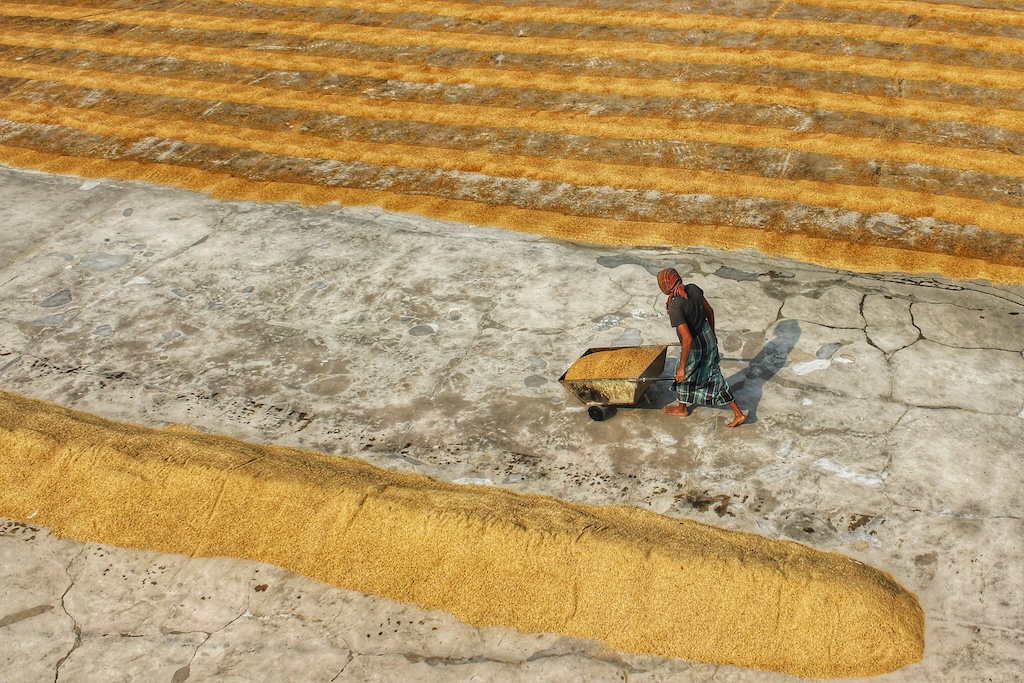
Photo by Dibakar Roy on Unsplash
Exploring heat stress brought these ideas into focus. Australia’s climate is changing, and with it, the risks to worker health are intensifying. The Bureau of Meteorology (2025) reported that last year was Australia’s second-hottest on record, with national mean temperatures sitting 1.46°C above average. For many outdoor and industrial workers, that rise is not a statistic, it is a lived reality. During the 2014 South Australian heatwave, Adelaide reached 46°C, becoming the hottest city in the world at the time (Australian Institute of Health and Welfare, 2024). The result was sobering: hundreds of hospital admissions, a 25% increase in ambulance callouts, and dozens of heat-related deaths. Extreme heat is not merely uncomfortable, it is an occupational and public health crisis.
As physiotherapists, we understand the body’s capacity to perform under strain. Yet, no amount of conditioning can outpace an environment that continually exceeds human tolerance. When ambient and metabolic heat loads surpass the body’s threshold for safe dissipation, physiological strain intensifies, setting off a cascade that may progress from heat stress to exhaustion, and, if untreated, to heat stroke. The implications reach beyond physiology; they highlight the fragile interface between human capacity and environmental stability.
The right to work safely, without exposure to preventable harm, is a fundamental human right (International Labour Conference, 2022). As climate change intensifies, that right is increasingly challenged. Through my WHS industry placement, I learned that physiotherapists play a vital role in addressing this challenge, not only by treating injuries but by preventing them through education and advocacy grounded in occupational legislation. Our understanding of biomechanics and workplace demands positions us uniquely to advise on workload pacing and ergonomic adaptations to manage risks. By integrating evidence-based strategies with workplace design and safety policies, physiotherapists can help create environments that protect both health and productivity.
A worker collapsing from heat exhaustion is not simply a medical emergency. It reflects a broader imbalance between labour expectations, environmental conditions, and human limits. This awareness challenges us to think beyond individual treatment and consider how systemic and environmental factors shape health outcomes long before someone becomes a patient. Factors like job design, climate exposure, and systemic inequities all contribute to injury risk, and physiotherapists are well-placed to identify and influence these factors.

This module has refined how I view my role as a physiotherapist. It reminded me that our work extends beyond rehabilitation, and it is also about enabling people to adapt, sustain, and thrive amid change. Climate change demands that prevention and sustainability become central to practice. As temperatures rise, so too must our professional awareness and ethical responsibility.
Climate change is not only an environmental issue; it is a profoundly human one, reshaping how we live, work, move, and connect with the world around us. For physiotherapists, whose practice centres on optimising human function and participation, this presents both an ethical and professional challenge. If increasing heat makes it unsafe to move, play, or work, how do we safeguard the very capacities our profession exists to protect? Our role must evolve beyond rehabilitation to one that actively supports adaptation, resilience, and advocacy, ensuring that people can continue to move, live, and participate meaningfully in a world that is becoming too hot to do so safely.
References
Australian Institute of Health and Welfare. (2024). Let’s talk about the weather: Injuries related to extreme weather. Australian Government. https://www.aihw.gov.au/getmedia/6404f0e8-e75e-4aa0-b847-032230726a33/let-s-talk-about-the-weather-injuries-related-to-extreme-weather.pdf
Bureau of Meteorology. (2025). Annual Climate Statement 2024. Australian Government. https://www.bom.gov.au/climate/current/annual/aus/
International Labour Conference. (2022). A safe and healthy working environment is a fundamental principle and right at work. https://www.ilo.org/sites/default/files/wcmsp5/groups/public/%40ed_dialogue/%40lab_admin/documents/publication/wcms_850673.pdf
Header image by Shawn Rain on Unsplash