
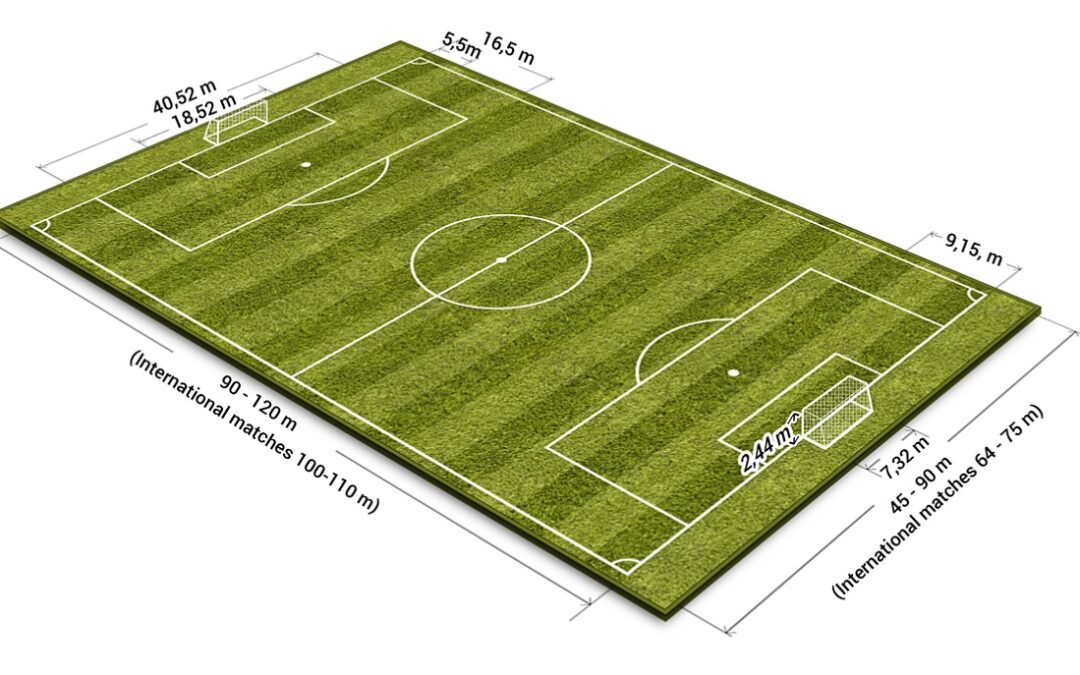
Recently, I saw a Norwegian documentary called Oppsynsmannen and read an article on NRK that stayed with me longer than expected because of one simple number (Hammerstad et.al. 2023, Støstad et.al 2025). Every day in Norway, an area of nature the size of two football pitches disappears. Simply built over. Roads, cabins, industrial areas, housing. The number is small enough to feel abstract, yet concrete enough to imagine. Two pitches a day. Once you see it, it is hard to unsee.
What struck me was how easily this could have passed unnoticed. Nature loss here does arrive as reasonable decisions, as development. It fits neatly into local zoning plans and political compromises. And that is precisely why it matters, because this is about the landscapes we live in, move through, and quietly accept as changeable.
The Green to Grey project has mapped land take across Europe using satellite data and AI, making visible something that until recently remained fragmented and anecdotal (Sentek et. Al. 2025). What it shows is a pattern. A slow, cumulative transformation of land that happens below the threshold of alarm. Once it becomes visible, it invites an uncomfortable question: how did this become normal?
From green to grey, across Europe
According to Green to Grey, Europe lost around 9,000 km² of natural and agricultural land to construction between 2018 and 2023 (Sentek et. Al. 2025). That corresponds to roughly 600 football pitches per day, every day, for five years. These are not only urban expansions. Much of the land loss occurs outside cities, in areas that used to function as ecological buffers, agricultural zones, or shared commons. Housing, roads, logistics centres, data facilities, tourism infrastructure. One project at a time.

Joost van Wijchen (MSc)
Associate Teaching Professor and Program Lead Physiotherapy at HvL Western Norway University of Applied Sciences
I am an educational designer and physiotherapist exploring how ecological change shapes health and movement in everyday life. My work links embodied practice with planetary health, inviting reflective praxis on environment, justice, and how our landscapes shape care.
When viewed country by country, the picture becomes more nuanced. Larger countries lose more land in absolute terms, which is unsurprising. But when land take is adjusted for population size or country size, the pattern shifts. Norway, despite its large landmass and relatively small population, shows the highest land take per capita in Europe, around six square metres per person per year, while the Netherlands, with its small size and large population, build on a larger portion than any other country in Europe (Sentek et. Al. 2025). Countries such as Switzerland show figures nearly ten times lower. These differences matter, even if land take is only one indicator among many.
It would be misleading to treat these numbers as moral rankings. They are not. But they are signals. They point to different development logics, different planning cultures, and different relationships between growth and land. And they challenge the idea that nature loss is an unavoidable side effect of modern life. Some countries clearly manage to limit it more than others.
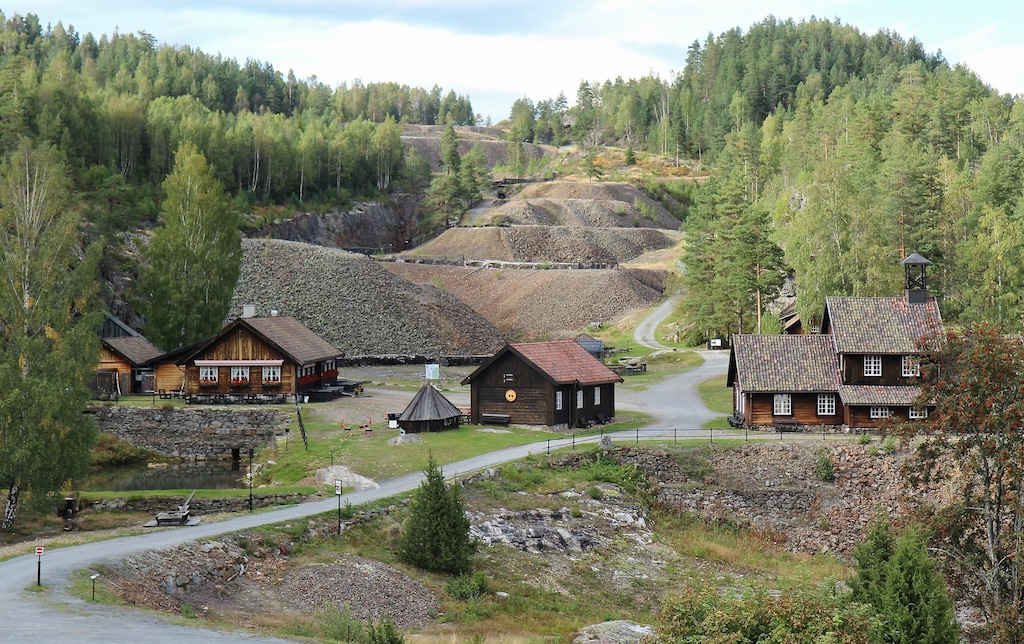
Photo by Arvid Høidahl on Unsplash
Development, wishes, and quiet trade-offs
One reason land take is so difficult to address is that it rarely looks unreasonable in isolation. A road improves access. A cabin offers rest and family time. A warehouse supports jobs and supply chains. A data centre keeps the digital infrastructure running. None of these are inherently problematic. Many are framed as necessary. Some are even framed as part of a green transition.
The issue does not emerge in individual projects, but in their accumulation. What Green to Grey demonstrates clearly is that nature loss in Europe is driven less by population growth than by patterns of consumption and land use (Sentek et. Al. 2025, Støstad et.al 2025 ). Comfort, accessibility, speed, convenience. These are deeply embedded in how we live and what we expect. They are also politically mediated. In democratic societies, land does not disappear without consent, even if that consent is indirect or passive.
This is where unease begins to surface, as recognition. If land take reflects collective choices, then responsibility is distributed. It does not sit neatly with developers or policymakers alone. It sits with us, as citizens, voters, consumers, professionals. That does not mean blame. But it does mean involvement.
Discomfort without moralisation
I want to be careful here. This is not a call for purity, nor an argument about individual guilt. I am part of this system. I live in a house. I travel. I benefit from infrastructure. There is no outside position from which to speak.
What NRK and Green to Grey offer is not a moral judgement, but visibility. They show how incremental change becomes irreversible when it remains unquestioned. How decisions that feel reasonable today accumulate into losses that future generations cannot undo.
This kind of discomfort is not paralysing by default. It can be productive. It invites reflection rather than defence. It asks us to slow down and notice what is usually backgrounded. Not to stop building entirely, but to ask different questions. Do we always need new land, or can we reuse what is already built? Do all forms of growth require spatial expansion? What do we consider worth protecting?

Photo by Chandler Cruttenden on Unsplash
From unease to hope, grounded in practice
Rebecca Solnit often writes that hope is not certainty, but orientation. Not optimism, but a willingness to act without guarantees (Solnit & Lutunatabua 2023). In that sense, unease is not the opposite of hope. It is often its starting point.
In Norway, public engagement around nature loss has grown precisely because the issue became visible. The Oppsynsmannen series contributed to that. So have local protests against specific developments (Hammerstad et al., 2023). These are not grand revolutions. They are small acts of attention and resistance, grounded in place.
Hope here does not mean believing that everything will turn out fine. It means recognising that choices still exist, and that trajectories are not fixed. Some European countries demonstrate that lower land take is possible. Some municipalities prioritise densification over sprawl. Some communities succeed in protecting local landscapes.
Closing reflections
The question, then, is not whether we should stop living, building, or moving. It is whether we are willing to see the costs that remain hidden when we do so. Two football pitches a day is not a metaphor, it is a measurement.
Environmental physiotherapy, and planetary health more broadly, do not begin with solutions. They begin with attention. With noticing the conditions that shape health long before symptoms appear. With staying with discomfort long enough for it to become reflective rather than defensive.
From there, praxis becomes possible. Not heroic, not pure, but grounded. One place at a time. One decision at a time. Before green turns grey without us even noticing. Let us, as physiotherapists, take the environment seriously as an indistinguishable part of our professional focus.
AI declaration
During the preparation of this work, the author used ChatGPT to check grammar and syntax. The content was reviewed, edited, and verified by the author, who takes full responsibility for the publication’s accuracy and integrity.
References
Hammerstad, K., Ådland, J.E., Haugen, V.F. (2023) Oppsynsmannen. NRK. https://tv.nrk.no/serie/oppsynsmannen/sesong/1
Sentek, Z., Prtoric, J., Sheffiles, H., Salzenstein, L. (2025) Green to Grey, how Europe is squandering the little nature it has left. Arena for journalism Europe. https://greentogrey.eu
Støstad, M.N., Solvang R., Børringbo. A..(2025) Europa fra grønt til grått, NRK, https://www.nrk.no/dokumentar/xl/europa-fra-gront-til-gratt_-nordmenn-bygger-ned-mest-natur_-viser-europeisk-kartlegging-1.17577504
Solnit R. & Lutunatabua, T.Y. (2023). Not Too Late: Changing the Climate Story from Despair to Possibility. Chicago: Haymarket