
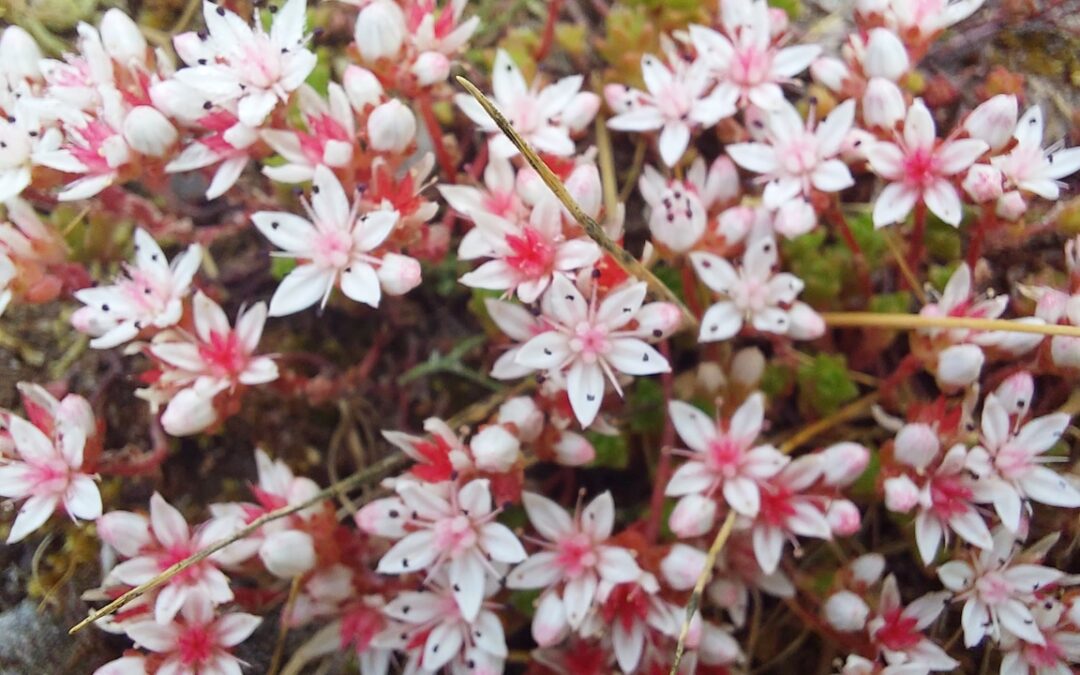
I grew up in the west of Ireland, where the land wasn’t something you visited, it was something you belonged to. As a child, I’d disappear for hours into fields and bogs, building shelters, shaping clay from the stream, following something instinctive in my hands. No one showed me how to do this. It was innate, remembered. Looking back, I can see that what I experienced wasn’t just freedom, it was safety. It was regulation, even if I didn’t have the language for it then. The landscape was a part of me, and I, in turn, belonged to it.
At the Irish Society of Chartered Physiotherapists 2026 Annual Conference in Limerick, I spoke about this idea at question time following a panel discussion on physiotherapy in the context of climate change and conflict: that we cannot separate the female body from its environment. Biology is not fixed, it is constantly taking things in, adjusting, responding, in conversation with itself and with the world around it.
Women appear to carry that conversation quite visibly, from puberty through to menopause, the hormonal system is highly sensitive to context. It responds to stress, nourishment, relationships, and belonging. In that sense, hormonal health becomes a barometer. I often describe the reproductive system as the canary in the coal mine of female health. It is one of the few systems that can reduce or cease function without immediate catastrophic consequences, making it an early signal that something in the wider system is under strain.
Current research in neuroendocrinology and environmental health supports this. When stress is ongoing, cortisol levels remain elevated, reproductive function is deprioritised, and the body shifts into survival mode (Koysombat et al. 2023). This is not dysfunction. It is adaptation. This becomes particularly visible during menopause. On paper, it is a natural transition. The ovaries wind down, and the adrenal glands and fat tissue theoretically buffer the change. In practice, many women describe something far more abrupt. A cliff edge. A sense of their system unravelling. I don’t believe this is the body failing. I think it is the body responding precisely to the life it has been living. To years of stress, disconnection, and environments that never allow the nervous system to settle.
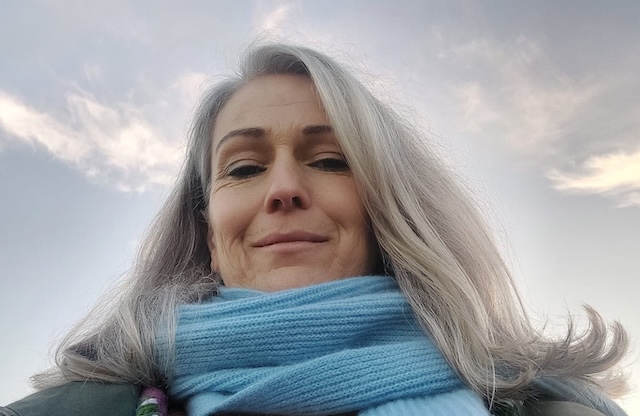
Ruth Molloy
BSc Hons MS MISCP Corú registered Physiotherapist
Ruth Molloy is a senior clinician-researcher with over three decades of international experience across Switzerland, Scotland, and Ireland. A Chartered Physiotherapist, Registered Nurse, and yoga teacher, she applies an eclectic, holistic lens to women’s health, stress, and chronic conditions. Her University of Galway research advances interdisciplinary, biopsychosocial approaches to menopause care.
Melinda Gates is famously quoted saying “We are sending our daughters into workplaces designed for our fathers.” I saw this clearly in my research with climacteric women in academia participating in a physiotherapy-led yoga and education programme. The barriers to change were not personal, they were structural. Women were trying to care for themselves in environments that rewarded overwork and emotional suppression. As one participant said, “successful people don’t have periods or go through menopause.” The message was clear: to succeed in certain environments, the body must be ignored (Molloy, 2026).
My personal experience in a busy Physiotherapy Practice and in Academia echoed this. With no one to talk to and nowhere to go for overwhelming feelings, I found myself one day back in my childhood woods. I was carrying a grief and a weight that didn’t make any logical sense. I found a patch of moss, lay down and cried. I just let the feelings flow over me. Slowly, my breathing deepened, and the tension softened. I literally felt myself ground. I’ve seen the same in my son, who would disappear into the forest when he was fractious and come back calmer. Nature didn’t fix him. It steadied him. This is not about romanticising nature. It is about recognising that we were never meant to be this disconnected. When we remember to reconnect, magic happens!
Right now, that disconnection is intensifying in a deeper, more unsettling context. Conflict and climate change are displacing communities across the world. Women are being separated from land, culture, and support systems. They are often the ones who rebuild, who create home and community, yet they are expected to do so without the conditions needed for stability. Of course, the body responds to that. We see it in rising symptoms, in exhaustion, in struggling musculoskeletal systems that just can’t keep compensating for external pressures.
If we want to support women’s health in this context, we need to ask different questions. Not just what is wrong, but what has this body been responding to? When a woman feels safe, connected, and supported, our role as physiotherapists changes from fixing to empowering. We become catalysts for change, allowing women to resource and advocate for themselves. Helping her come back to the basics of how she eats, sleeps, moves, rests, and manages stress in her environment in a way that works for her life.
Our role should extend beyond the clinical setting. We see every day how the environment shapes health. This gives us both insight and the responsibility to speak about issues such as displacement due to climate change and conflict, or gender inequity and access to care. At the same time, as we embrace new technologies, we must remain grounded in our core strengths of compassion, presence, touch, and human connection. These are what create safety, and safety is what allows healing.
A woman does not need to be forced back into balance. Her body already knows how to find it. What she needs is an environment, and the resources, that allow her to thrive, not merely survive.
References
Koysombat, K., Dhillo, W.S. and Abbara, A. (2023) ‘Assessing hypothalamic pituitary gonadal function in reproductive disorders’, Clinical Science, 137(11), 863-879.
Molloy, R., (2026) ‘Evaluation of an Evidence-Based Yoga and Education Programme for Menopausal and Perimenopausal Women in Higher Level Education’ Thesis Submission for Masters by Research in Physiology University of Galway Ireland 2026.