

If we know that climate change is real—and that it represents the greatest threat to health, affecting every person on the planet—why is there still no urgency to modify, change, and adapt physiotherapy curricula? If planetary health truly matters in health education, why is there such resistance to embedding it meaningfully into our teaching?
We have demonstrated that curriculum change is possible. Cultural capabilities have been embedded across programs. Some physiotherapy programs have responded quickly, boldly challenging existing teaching approaches, student perspectives, and even staff assumptions about what counts as “core” physiotherapy knowledge. So why does climate change remain at the margins?
Climate change is not an abstract concept—it shapes lived experience, clinical presentations, and health outcomes. If these realities are not embedded into clinical reasoning frameworks, then our teaching falls short.
Yes, aspects of climate change may appear in final-year subjects or interprofessional case studies. But unless climate and environment are embedded throughout every year and every clinical reasoning process, will students truly integrate them into decision-making? Or will they see them as an optional add-on—easy to ignore under pressure?
Australia has always lived with environmental extremes:
“A land of sweeping plains,
Of rugged mountain ranges,
Of droughts and flooding rains.”
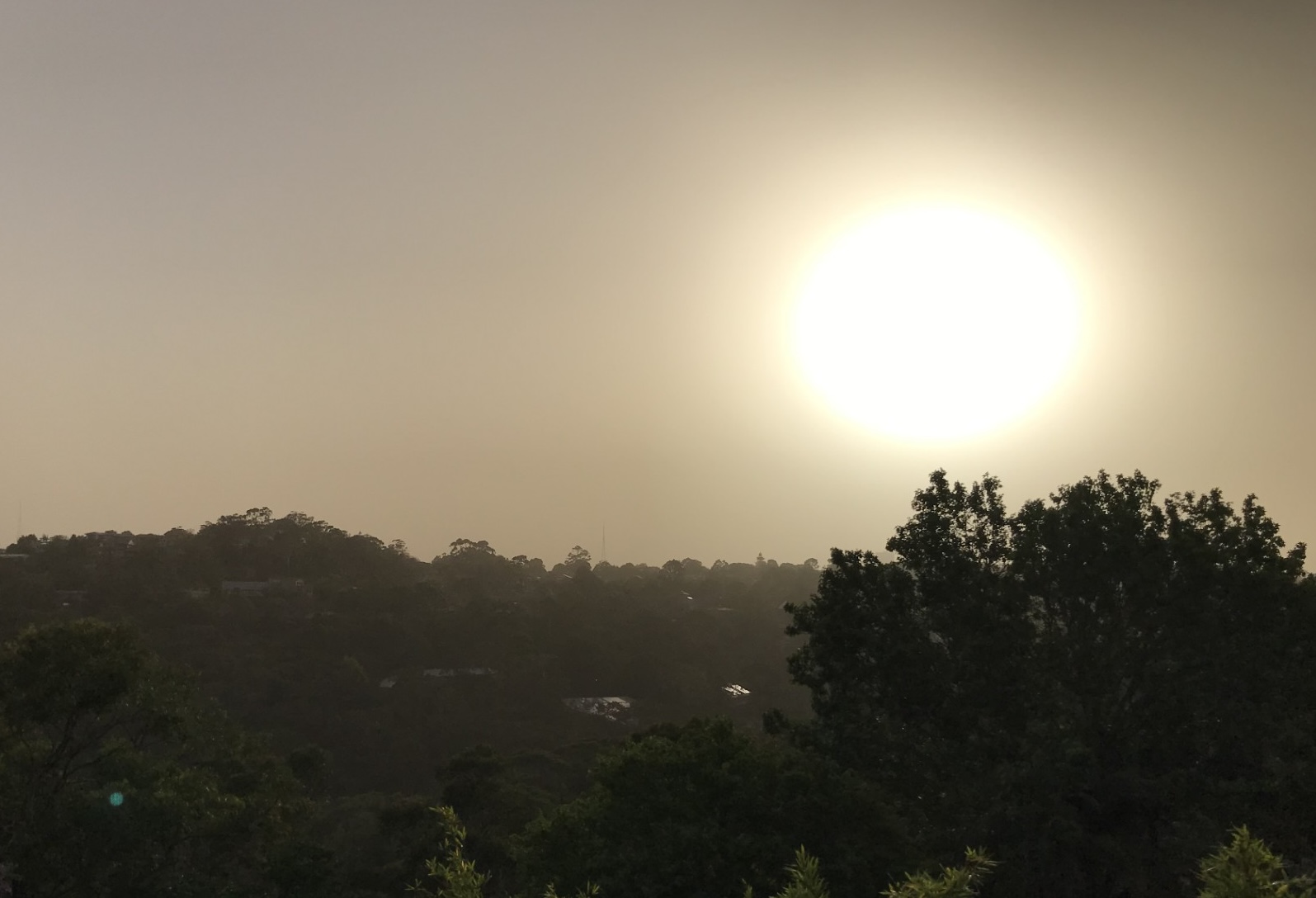
Bushfires, floods, heatwaves, and drought have long existed but now have increased in intensity and frequency driven by climate change. The environment has always shaped health and function. So why do we continue to teach clinical reasoning as though the environment is external or optional?
Kerstin McPherson (PT, PhD)
Senior Lecturer, UNSW, Australia
Kerstin is a Senior Lecturer in Physiotherapy at UNSW, Australia. Her teaching and research integrate women’s and men’s health physiotherapy, rural health, equity and diversity, planetary health, climate change, and sustainability. Through creative curriculum design, aims to prepare graduates for socially responsive, environmentally sustainable and inclusive physiotherapy practice.
If every clinical decision we make is influenced by context. The environment must be considered in every assessment, every management plan, and every professional decision. It cannot sit outside the curriculum. If a student is suggesting an exercise – where is that exercise occurring justify why it is not located outside or be questioned on why it should be – demonstrate an eco-environmental clinical reasoning process? Do we really need accreditation standards to explicitly use the words environment, climate change, or planetary health before we act on what is already visible?
“An Overloaded Curriculum” Is not an excuse. The argument that “we can’t fit anything else into the curriculum” is often used to justify inaction. But embedding climate change is not about adding more content—it’s about creating meaning. This requires challenging the status quo and being bold and teaching differently. Following old paradigms of what physiotherapy has been, instead of what it can be, limits our profession. Change requires courage.
“Whatever you can do or dream you can, begin it;
Boldness has genius, power, and magic in it.” Johann Wolfgang von Goethe
Students Care—Are We Listening? Published and unpublished studies suggest students do care. They notice unnecessary waste in teaching environments, contradictions between sustainability rhetoric and daily practice, and a lack of alignment between health education and real-world challenges. They notice when it is included. They remember.
When challenged to think differently—to create, innovate, and question—many students rise to the occasion and exceed expectations. They want to be part of solutions, not passive recipients of outdated content, thinking and paradigms. Sometimes change requires disruption. “Punk it up.” Is a simple example of embedding climate change into a single subject using storytelling approaches inspired by Physiopunk. Alternative pedagogies can engage students, spark creativity, and normalise climate-informed clinical reasoning.
But they need help to see how climate change, sustainability and planetary health are related to physiotherapy practice and patient care and outcomes. And maybe this highlights physiotherapy teaching academics‘ lack of inaction to create the meaning, to create the link between the theory and the clinical relevance.
Recent studies show that while students may initially only acknowledge that climate change is happening, deeper engagement through curriculum integration fosters responsibility, agency, and preparedness.
What happens if we don’t act and act now? If we don’t challenge the status quo—physiotherapy graduates will enter practice unprepared for the realities of a rapidly changing world. They won’t be bold and courageous and adapt and thrive. Climate change is not coming. It is already here. And so is our responsibility to act and act now!
References
My Country poem by Dorothea Mackellar: https://www.dorotheamackellar.com.au/my-country/
Johann Wolfgang von Goethe quote https://www.azquotes.com/author/5628-Johann_Wolfgang_von_Goethe/tag/genius#google_vignette
McPherson, K., & Myers, C. (2025). Preparing Rural Physiotherapists: Addressing Climate Change Through Entry-Level Education. Internet Journal of Allied Health Sciences and Practice, 23(4), 25.
McPherson, K., Cantwell, B., & Dos Santos, V. (2026). Physiotherapy, medical and occupational therapy students’ views of climate change and sustainability in their curricula at a rural university in Australia. Focus on Health Professional Education: A multi-disciplinary journal, 27(1), 72. https://doi.org/10.11157/fohpe-vol27iss1id938
Tyagi, V., Saravanos, G. L., Dunsmore, M., Power, T., & McCormack, B. (2025). Planetary health and person-centred healthcare practice. Journal of Advanced Nursing, 81, 537–540. https://doi.org/10.1111/jan.16153
A simple concept of embedding climate change into one subject used stories inspired from Healthpunk https://www.openphysiojournal.com/portfolio/physiopunk-vol-1/
McPherson, K., Black,J. Byrne, A., Frost,B. Elder, M. & Olver, P. (2023) Punk it up – Introducing physiotherapy students to climate change Inaugural Environmental physiotherapy Association International Festival. https://environmentalphysio.com/events/ept-festival2023/