
MOVING EARTH
The Environmental Physiotherapy Association Blog features regular news, events and ideas on all things Environmental Physiotherapy.
The contributions presented in this blog do not necessarily represent the opinions and values of the Environmental Physiotherapy Association as such. Rather, they represent the thoughts and work of contributing authors and through these, an open and ongoing discussion of what an environmentally aware and responsible is, could and should be.
Please use our contact form if you are interested in contributing to Moving Earth: The Environmental Physiotherapy Association Blog. Contributions in any language and any format on all potentially related topics welcome! Please see our contribution guidelines at the bottom of this page. We appreciate your help in developing and advancing an environmentally aware and responsible physiotherapy profession across research, education and clinical practice.
A walking-based program to address the physical, mental and social aspects of low back pain: A single-case study
Last sprint in this Bachelor of Physiotherapy. Our bachelor thesis needs to be innovative! Looking for a partnership with a technology company to...

Implementing environmental physiotherapy learning outcomes in the new UK MSK Advanced Practice Standards
We have all come across learning outcomes (LOs) that form the backbone of accredited physiotherapy programmes and standards of practice....

Books that have guided my transformative change towards planetary justice
I recently chatted with a colleague about books that have changed our lives (1). It was literally a 2-minute conversation, but the idea of the...

Healthpunk Vol 2: Healthcare + Fiction + You
'Tis the season to imagine new ways forward for more ecologically and socially responsible healthcare futures! One year after the publication of...

Access to clean and healthy environments is now a universal human right
The United Nations (UN) declared access to clean and healthy environments a universal human right in July 2022. This historic decision was voted in...

Showcasing the Potential of Student Research at the Fourth Environmental Physiotherapy Roundtable
For the fourth year in a row, toward the end of November each year since the launch of the EPA, we have hosted an environmental physiotherapy...

Sustainability in orthopaedic physiotherapy and rehabilitation
With the goal of decarbonization and carbon neutrality in the health sectors of many countries by 2050, health professionals must implement systemic...

An evidence-based guide for decarbonizing physiotherapy clinics
Climate change is the largest threat to human health and wellbeing globally (WHO, 2021). The healthcare industry itself currently contributes to...

Nature as co-therapist: Physiosail and the connection between disability and environment
The definition of disability and disabled people depends on the model used. The most widely used model in the health system is the "medical model"....
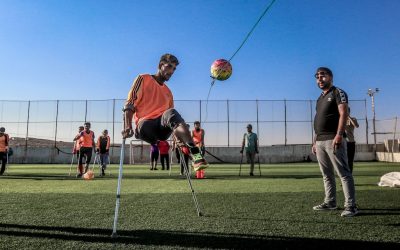
Refocusing Disablement Models about Context: Physiotherapy and the Ecological-Enactive Model of Disability
A complete, humanized description of disability requires consideration of context (e.g., physical environment, social interactions, background...
Environmental Physiotherapy Education Podcast
Environmental Physiotherapy on youtube
Text, video, audio, image and other types of contributions in any language are all welcome.
If you contribute a text, we will need the following:
Text: 250-1000 words to be sent in a word doc. The text cannot contain numbered/bullet point lists.
Images: Please provide 3-5 jpg images that are relevant to your text. The images should have horizontal alignment, high resolution, and either be from your private collection or licensed as ‘free to share and use’. Do not embed the images in a text file. Send them as individual email attachments.
Clearly name one of the files ‘header image’ – this will be sitting at the top of your post, right under the heading.
The EPA will not publish AI generated images.
Please make sure all images come with relevant citation information, including even a specific image link if they are downloaded from a website.
References: Use of references is possible, but not mandatory (always depends on your topic). If you use references, please do so using APA7th.
AI declaration: Please state clearly and in a separate section if and how AI was used in the creation of your blogpost. If you have not used AI to generate your text, please state this clearly.
Regardless of contribution type, for the author info box, please also send us
A profile picture of yourself (vertical alignment, sent as separate email attachment)
Your current title and role
Max 40 word (2 sentences) text about yourself (check existing blogposts for some examples)
Your Linkedin handle (if you have one; alternatively a website through which people can find how to contact you)
We appreciate your effort and support in developing and advancing environmental physiotherapy in all of its facets, and look forward to reviewing your draft contribution!